
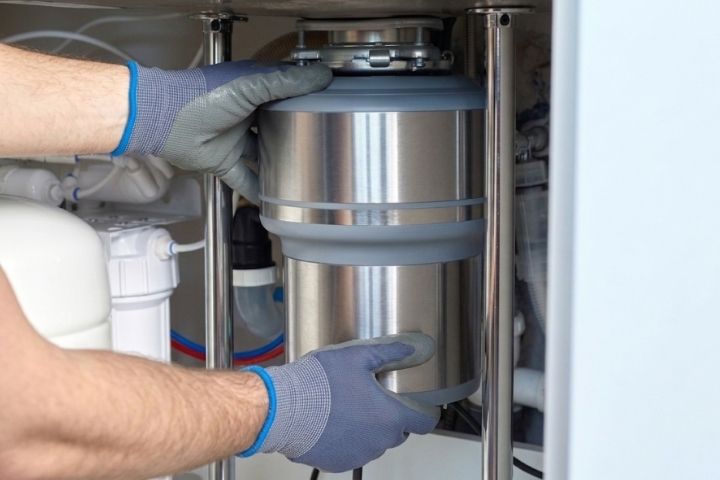
How to Unclog a Garbage Disposal and Keep It From Clogging Again
A humming disposal, water standing in the sink, or lingering odor can make everyday kitchen tasks harder. Knowing how to unclog a garbage disposal helps you identify a simple jam before the problem spreads. Start by deciding whether the grinding chamber has jammed or the connected drain has clogged.
Grease, fibrous produce, large food scraps, and foreign objects can overload or obstruct your disposal. How you use the disposal also determines whether food clears the trap or collects inside it. Careful troubleshooting protects your hands and motor while showing when the clog needs professional attention.
Tell a Garbage Disposal Jam From a Drain Clog
The sound and drainage pattern help you determine whether the disposal or connected piping needs attention. When you hear humming without grinding, a foreign object may have stopped the internal grinding mechanism. Complete silence suggests a reset or power problem, while normal grinding with standing water can indicate a downstream clog.
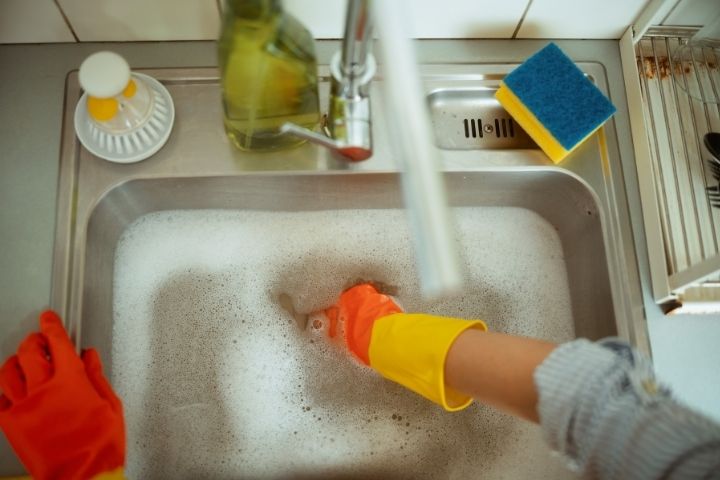
Before deciding how to unclog a garbage disposal, shut off power and check how nearby fixtures drain. Slow drainage in another fixture often signals a shared restriction farther down the line. Once you identify the likely source, you can troubleshoot without overheating the motor or worsening the blockage.
How to Unclog a Garbage Disposal Safely
Electrical power and moving components make disposal troubleshooting different from clearing an ordinary sink drain. Knowing how to unclog a garbage disposal safely means protecting yourself before inspecting or moving anything. If the disposal hums without a burning odor, try these safety steps before calling a plumber.
Turn off the wall switch, then unplug the unit or shut off its dedicated breaker and let the motor cool.
Shine a flashlight into the chamber and remove visible objects with long-handled tongs, never your hands.
If your model has a bottom hex socket, insert the correct wrench and move it slowly both ways.
Work the wrench back and forth until the mechanism completes full rotations without resistance in both directions.
Remove loosened debris with tongs, press the reset button, reconnect power, start cold water, then switch on the disposal.
If the disposal still hums, disconnect power again and avoid forcing another test cycle. Stop when the wrench will not move, the reset button pops out again, or you smell burning. Contact a plumber for professional garbage disposal service because another test can damage the motor or worsen the obstruction.
Keep Your Garbage Disposal From Clogging Again
Good daily habits help prevent repeat jams after you learn how to unclog a garbage disposal safely. Run cold water before and during grinding, then continue the flow briefly after the disposal stops. Small, gradual loads reduce strain because too much debris can jam the mechanism or slow the drain.
Grease, cooking oil, and melted fat belong in a sealed container instead of your sink. Keep all solid food items outside of the disposal. Scrape food leftovers into compost or trash, then rinse dishes over the disposal opening, using the disposal for sauce or liquid matter.
Disconnect the power, then clean the rubber splash guard because trapped residue can create odors that resemble a clog. Inspect the drain opening regularly, and remove loose debris with tongs so it cannot settle deeper. Request routine plumbing inspections when odors persist or the sink repeatedly drains slowly.
Watch for Signs of a Deeper Drain Backup
You may know how to unclog a garbage disposal, but the same steps cannot clear downstream buildup. When the mechanism turns freely but water remains, the obstruction probably sits beyond the appliance.
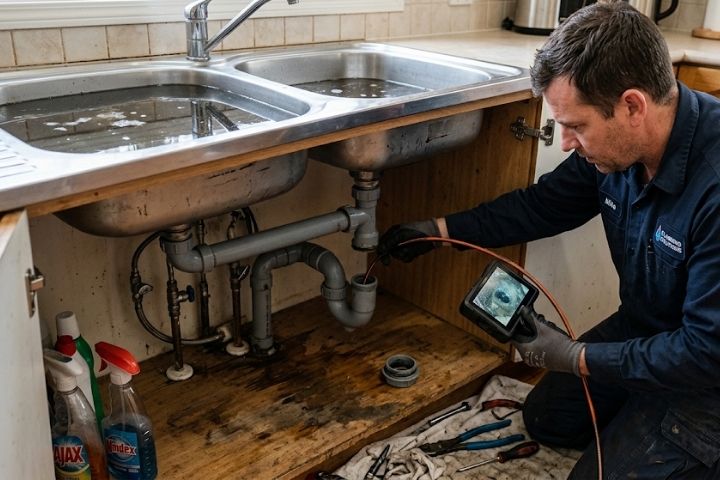
Slow dishwasher drainage or gurgling from a nearby sink can warn you that wastewater may soon back up. Address the warning signs early to limit overflow damage and help your plumber locate the restriction sooner.
Stop using the sink and skip chemical cleaners when wastewater rises, multiple drains back up, or the clog returns. At that point, request a drain inspection instead of repeating disposal resets or wrench adjustments.
Still Clogged? Get Professional Help
A disposal that remains jammed after you follow safe troubleshooting steps may have a damaged motor or stubborn internal obstruction. Recurring sink backups often signal buildup beyond the appliance, especially when nearby drains also empty slowly. Accurate Plumbing identifies whether the problem sits inside the appliance or farther along the drain.
If you cannot determine how to unclog a garbage disposal safely, stop because repeated testing can damage the unit. Our team will evaluate your kitchen plumbing and explain repair options before work begins. Contact Accurate Plumbing for a disposal and drain inspection when the blockage remains after these steps.